Welcome to the city museum of Trier!
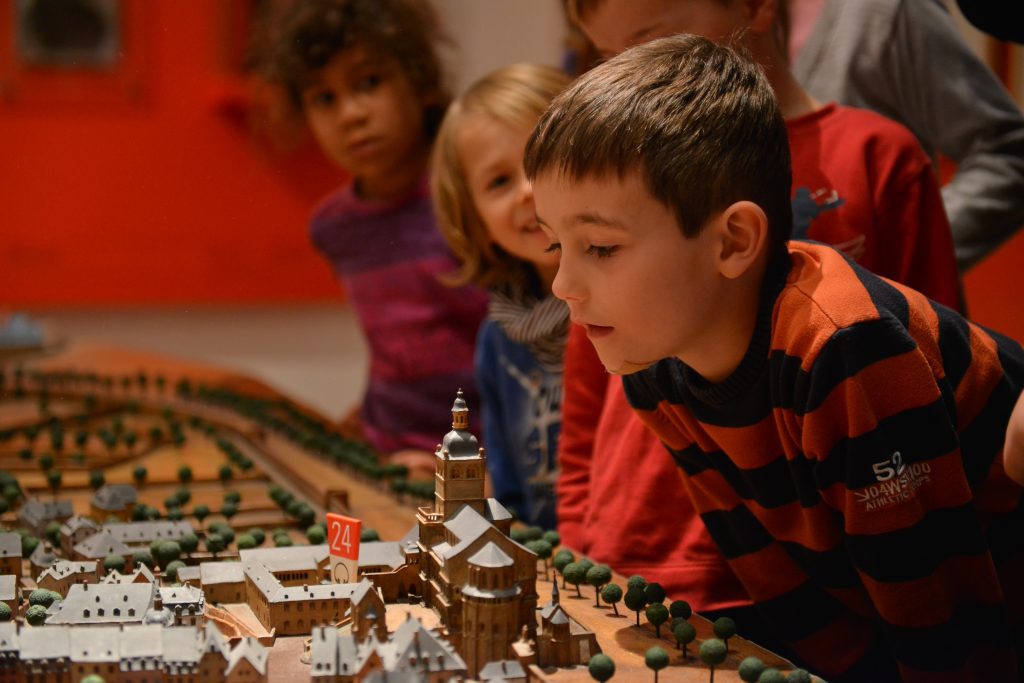
The City Museum Simeonstift in Trier shows art and cultural treasures from the Middle Ages to well into the 21th century. The exhibition is founded on a collection of valuable donations made by well-known citizens of the city. The artefacts on display are divided into a variety of sections, including paintings, sculptures, arts and crafts, Coptic textiles, furniture and small Oriental plastic art forms.
Practical Information
The focal point of the permanent exhibition revolves around the history of the city of Trier. Regularly changing special exhibitions are dedicated to Trier’s native artists or to topics associated with the city. The collection is housed in the Roman building of the Collegiate of St. Simeon, which originates from the 11th century and is directly adjacent to the Porta Nigra. Also worthy of note is the building itself, which boasts one of the oldest and rarely preserved two-storey cloisters. The admission price includes an audio guide (D/E/F/NL), also available as an audio guided tour for children (D).
Opening hours
- Tuesday to Sunday from 10 a.m. to 5 p.m.
- The museum is closed on Mondays.
Admission fees
- Admission 6 €, reduced 4,50 €
- Families (2 adults and children) 9,50 €
- Admission free for children to the age of 10
- School classes with teachers 1,50 € per person
- Reduced fee with Trier-Card 25%
Fees for guided tours
- To book a guided tour, contact us by E-Mail or by telephone at +49 (0)651 718-1452.
Location
The Stadtmuseum is situated next to the Porta Nigra in the Romanesque Simeonstift building. A ten minutes’ walk from the main station, bus stops (Porta Nigra & Simeonstiftplatz) for all city buses as well as multi-storey and underground car parks are all located in the vicinity.
Accessibility
The disabled accessible entrance to the Museum is via “Brunnenhof”. A lift in the central stairwell provides unobstructed access to all areas of the Museum. Disabled toilets are located in the basement (accessible via lift).
CONTACT US
Stadtmuseum Simeonstift Trier
Simeonstr. 60
54290 Trier
Phone: +49 (0)651 718-1459
Fax: +49 (0)651 718-1458
E-Mail
Exhibitions
Jewish Life in the Middle Age
October 11, 2026 – Aprile 4, 2027
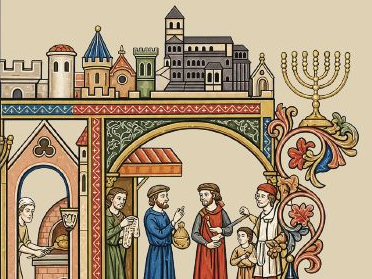
The exhibition “Jewish Life in the Middle Ages” recounts the eventful history of the Jewish community in Trier, traces of which remain visible in the cityscape to this day. With its historic Jewish quarter and the preserved Judenpforte (Jewish Gate), the site offers a unique glimpse into the past: from at least the 11th century onwards, a significant Jewish community flourished here under the protection of the Archbishop.
The 1920s. Golden Years – Dark Times
July 5, 2026 – January 24, 2027
The 1920s. Even today, this era, which was characterised by a contrast between a spirit of optimism and crisis, still holds a special fascination – perhaps because it is so relevant to our present day.

The history of Trier
Permanent exhibition
Some 900 objects from 2,000 years of town history await visitors on 1,000 square metres of exhibition space. Donations from citizens of Trier formed the point of departure for this collection, and the various sections on the town’s history are accordingly diverse. Spread throughout the northern and eastern wings of the museum, they include paintings and sculptures, porcelain and textiles, but also an outstanding collection of Eastern Asian objects, all providing insight into Trier’s economic, political and cultural past.